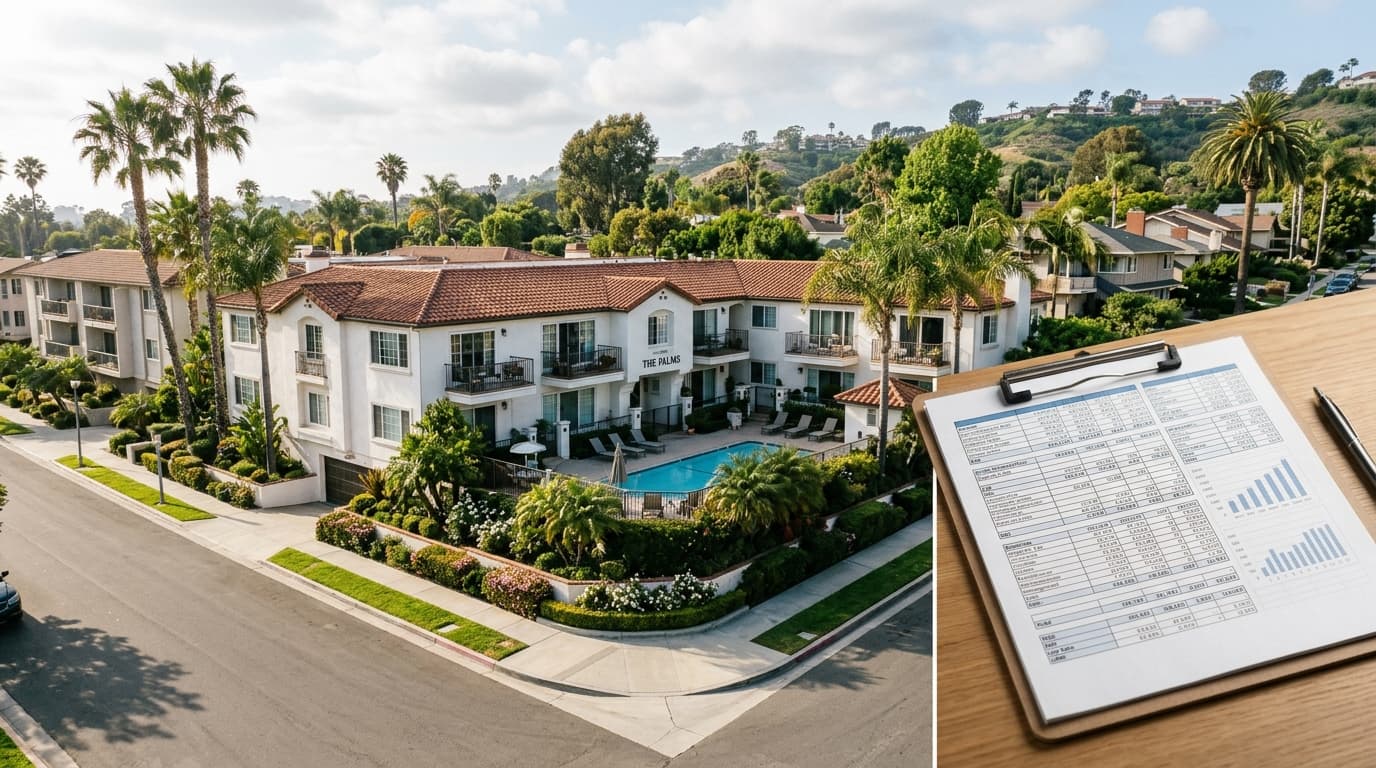
Multi-Family Property Acquisition in Orange County: Underwriting and Yield Analysis
By Max Hung Nguyen
Buying a multi-family property is a numbers exercise first. Learn the core underwriting steps, from rent roll to cap rate, and the Orange County factors that change the math.
Multi-family properties, from duplexes to small apartment buildings, appeal to investors who want rental income and long-term appreciation potential. They also demand careful analysis. The price per unit may look attractive, but the real question is what the property earns after expenses, and how safe that income is.
This article is educational and not investment, tax, or legal advice.
Start with income
Gather the rent roll. Ask for a current list of units, tenants, rents, lease dates, and deposits. Compare it with signed leases and, if possible, bank deposits.
Check market rents. Compare current rents with similar units nearby. Rents far below market may present an opportunity, but California and local rules can limit how quickly increases are allowed.
Account for vacancy. Even well-run buildings have turnover. Use a realistic vacancy and credit loss allowance, not 0%.
Look at other income. Laundry, parking, storage, or utility reimbursements can add to revenue, if they are documented and legal.
Then expenses
Underwrite expenses line by line, and be skeptical of seller projections. Typical categories include:
- Property taxes, which may be reassessed on purchase
- Insurance
- Utilities not paid by tenants
- Repairs and maintenance
- Property management
- Landscaping and trash
- Reserves for capital items such as roofs, plumbing, and paving
A property with deferred maintenance may need significant capital before it performs well, so inspect carefully.
Net operating income and cap rate
Net operating income (NOI) equals effective gross income minus operating expenses, before debt payments. The capitalization rate, or cap rate, equals NOI divided by the purchase price. It is a quick way to compare properties, although it ignores financing and future changes.
A simple example: if a building produces $100,000 in NOI and costs $2,000,000, the cap rate is 5%. Whether that is acceptable depends on the risk, location, and your alternatives.
Financing and cash flow
Debt changes returns. Compare loan terms, interest rates, amortization, and fees, then calculate:
- Debt service coverage ratio (DSCR): NOI divided by annual debt payments. Lenders often require a minimum.
- Cash-on-cash return: annual pre-tax cash flow divided by cash invested.
- Sensitivity. Test what happens if rates are higher, rents fall, or vacancy rises.
Conservative assumptions protect you from disappointment.
Orange County factors
- Rent regulations. State law and some local ordinances limit rent increases and govern termination of tenancies. Confirm what applies to the property.
- Zoning and permits. Check that units are legal and permitted. Unpermitted units can cause serious problems.
- Property tax reassessment. A purchase typically triggers a reassessment, which can raise taxes significantly.
- Local demand. Employment centers, transit, and amenities influence rental demand.
- Building condition. Older buildings may need updates to plumbing, electrical, or safety systems.
Due diligence checklist
- Rent roll, leases, and tenant estoppel statements
- Two or more years of operating statements
- Property inspection, including sewer line and roof
- Permit and code compliance history
- Insurance quotes and loss history
- Title report and survey
- Environmental review when appropriate
Mistakes to avoid
Relying on seller pro formas, ignoring reserves, underestimating turnover costs, and skipping legal review are common errors. A beautiful building is still a poor purchase at the wrong price.
Strategy matters
Some investors seek stable income, others look for value-add opportunities. Know your goal, because the best property for one strategy may not suit another.
Let's talk numbers
If you are exploring a multi-family purchase in Orange County, it helps to review the assumptions together before you make an offer.
Book Private Strategy Consultation with Max Hung Nguyen to discuss your goals and the opportunities that fit them.
Max Hung Nguyen, Real Estate Salesperson, CA DRE #02173126, Century Financial Group, Corp. (DRE #01930905), 8295 Bolsa Avenue, Midway City, CA 92655. This article is general information only and is not legal, tax, or financial advice. Consult a licensed professional about your situation.
Connect directly with Max Hung Tran to turn the ideas in this article into a clear next step.
Book Private Strategy Consultation