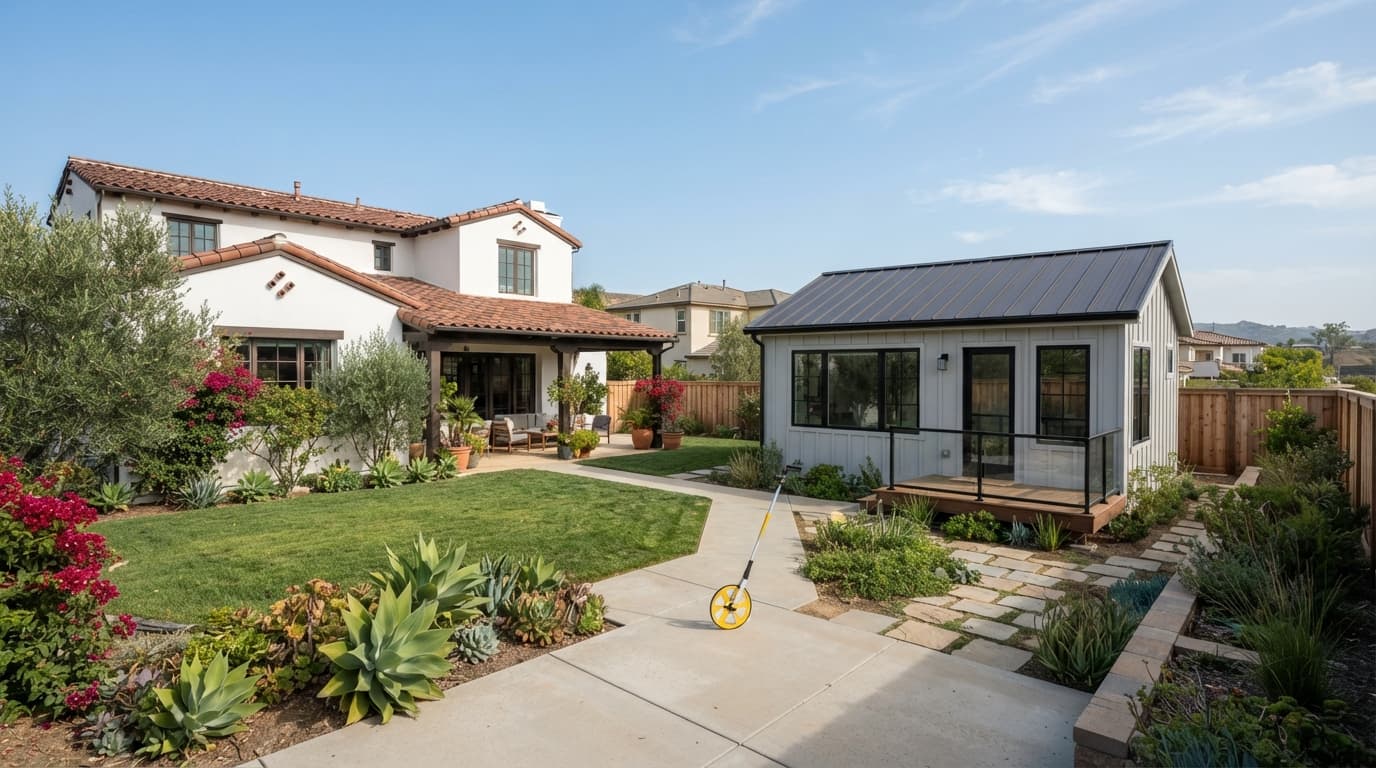
ADU Appraisal Strategies: Maximizing Equity Through Permitted Secondary Units
By Max Hung Nguyen
A permitted ADU can influence value, but only if it is documented and appraised well. Learn how appraisers look at secondary units and how to present yours.
An accessory dwelling unit, or ADU, can add living space, rental income, or flexibility for extended family. For homeowners, a natural question follows: how will this show up in an appraisal? The honest answer is that it depends on permits, quality, location, and the available comparable sales. This guide explains how appraisers think and how you can put your property in its best light.
Permits come first
An appraiser generally gives full consideration to space that is legally permitted and finished to code. Unpermitted conversions are treated differently, and may be excluded from living area calculations or flagged as a concern. Before anything else, confirm that your ADU has permits and a final sign-off from the city.
Keep the following in an organized file:
- Building permits and final inspection approvals
- Plans and any approved changes
- Certificate of occupancy or equivalent documentation
- Utility records, if the unit has separate meters
- Contractor invoices and warranties
How appraisers approach ADUs
Appraisers use several approaches, and the weight they give each depends on the data available.
- Sales comparison. The best evidence is recent sales of similar properties with similar ADUs. These can be hard to find, so adjustments may be based on limited data.
- Income approach. For properties with rental potential, an appraiser may consider market rents, although this is more common with income properties than with single-family homes.
- Cost approach. The cost to build, less depreciation, is sometimes used as a check, but cost is not the same as value.
A project that costs a certain amount to build will not automatically increase value by the same amount.
Details that influence value
- Size and layout. A functional unit with a kitchen, bathroom, and separate entrance is easier to compare.
- Quality of construction. Finish level, systems, and energy efficiency matter.
- Privacy and separation. Separate access and sound control add appeal.
- Parking and lot impact. How the unit affects yard and parking can affect buyer appeal.
- Location and demand. Buyers in some areas value ADUs more than others.
Preparing for an appraisal
- Provide documentation. Give the appraiser your permit file and a short description of the unit.
- List features. Square footage, bedrooms, bathrooms, kitchen, and utilities.
- Offer comparable sales. If you or your agent know of relevant sales, share them with sources.
- Make the property accessible. Ensure the appraiser can inspect both the main home and the unit.
- Keep it clean and ready. First impressions affect opinions of condition.
You can also ask your lender whether the appraiser will be familiar with ADUs in your area.
Financing and ADUs
Loan programs treat ADUs differently. Some lenders count potential rental income, and others do not. Rules also vary depending on whether you are buying, refinancing, or financing construction. Speak with a lender early to understand how an ADU might affect your options.
Equity considerations
An ADU can support equity by adding usable, marketable space, but it can also add costs: construction, property tax reassessment on the new construction, insurance, and maintenance. If you plan to rent, factor in management and vacancy. If you plan to sell, remember that some buyers love ADUs, while others see them as extra work.
Avoid these mistakes
- Assuming cost equals value
- Skipping permits to save time or money
- Failing to document the work
- Overbuilding for the neighborhood
- Not asking the lender how the unit will be treated
Make a plan
If you are considering building, buying, or selling a home with an ADU, a review of the numbers and the documentation can help you make better decisions. Our seller's strategic playbook includes guidance on presenting special features to buyers and appraisers.
Download High-Net-Worth Seller's Strategic Playbook PDF, and contact Max Hung Nguyen to talk through your property.
Max Hung Nguyen, Real Estate Salesperson, CA DRE #02173126, Century Financial Group, Corp. (DRE #01930905), 8295 Bolsa Avenue, Midway City, CA 92655. This article is general information only and is not legal, tax, or financial advice. Consult a licensed professional about your situation.
Connect directly with Max Hung Tran to turn the ideas in this article into a clear next step.
Download High-Net-Worth Seller's Strategic Playbook PDF